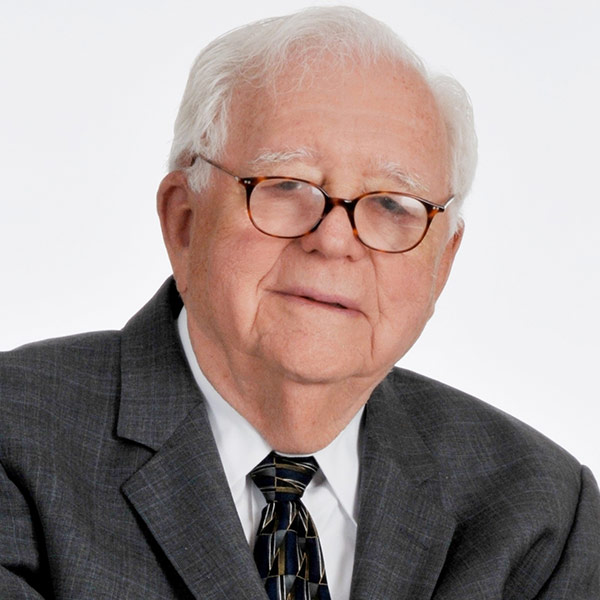
Eugene Braunwald, MD, MACC, one of the most influential figures in the history of cardiovascular medicine, passed away on April 22, 2026, at the age of 96. Widely regarded as the “father of modern cardiology,” Braunwald leaves behind a remarkable legacy defined by groundbreaking research, visionary leadership, and an enduring commitment to advancing patient care.
Born in Vienna, Austria, in 1929, Braunwald’s early life was shaped by profound historical events. As a child, he fled Nazi-occupied Austria with his family and immigrated to the United States as a refugee. That experience, he later reflected, instilled in him a deep sense of resilience and purpose that would guide his extraordinary career.
Braunwald went on to receive both his undergraduate and medical degrees from New York University before completing his internal medicine residency at Johns Hopkins Hospital. His career quickly rose to prominence, as he assumed pivotal leadership roles including Chief of Cardiology and Clinical Director of the National Heart, Lung, and Blood Institute. He also served as the founding Chair of Medicine at the University of California, San Diego, later becoming Chair of Medicine at Brigham and Women’s Hospital and Distinguished Hersey Professor of Medicine at Harvard Medical School.
Among his many pioneering achievements, Braunwald’s collaboration with Andrew Morrow led to the first comprehensive description of hypertrophic cardiomyopathy (HCM) as a distinct clinical condition in a landmark 1964 Circulation monograph. This work transformed understanding of the disease and remains foundational decades later. His contributions extended further with the creation of the Thrombolysis in Myocardial Infarction (TIMI) Study Group in 1984, which revolutionized the design and execution of large-scale cardiovascular clinical trials.
Braunwald’s influence on medical education is equally profound. As the founding editor of Braunwald’s Heart Disease and a longtime editor of Harrison’s Principles of Internal Medicine, he helped shape the training of generations of physicians worldwide. Over the course of his career, he authored more than 1,000 peer-reviewed publications, becoming one of the most cited cardiologists in medical history.
Colleagues and protégés have consistently praised his intellect, foresight, and mentorship. Valentin Fuster described him as both a visionary and a pragmatic thinker who could anticipate the future of medicine. Similarly, Marc Sabatine highlighted Braunwald’s lasting influence through the TIMI Study Group, noting that his mentorship shaped decades of progress in cardiovascular care.
Throughout his lifetime, Braunwald received numerous honors, including the Distinguished Scientist and Lifetime Achievement awards from the American College of Cardiology. He was frequently cited by peers as a deserving candidate for a Nobel Prize in cardiovascular medicine.
Even late in life, Braunwald remained optimistic about the future of medicine. In a 2022 interview, he expressed hope that heart disease would no longer be the leading cause of death within the next half-century—a testament to the transformative work he helped initiate.
Eugene Braunwald’s passing marks the end of an era, but his legacy lives on through the countless physicians he trained, the discoveries he made, and the millions of patients whose lives have been improved by his contributions.